Oil and Chemical Resistance
Motor oil, brake fluid, transmission fluid, cleaners, and solvents should be listed before product selection.
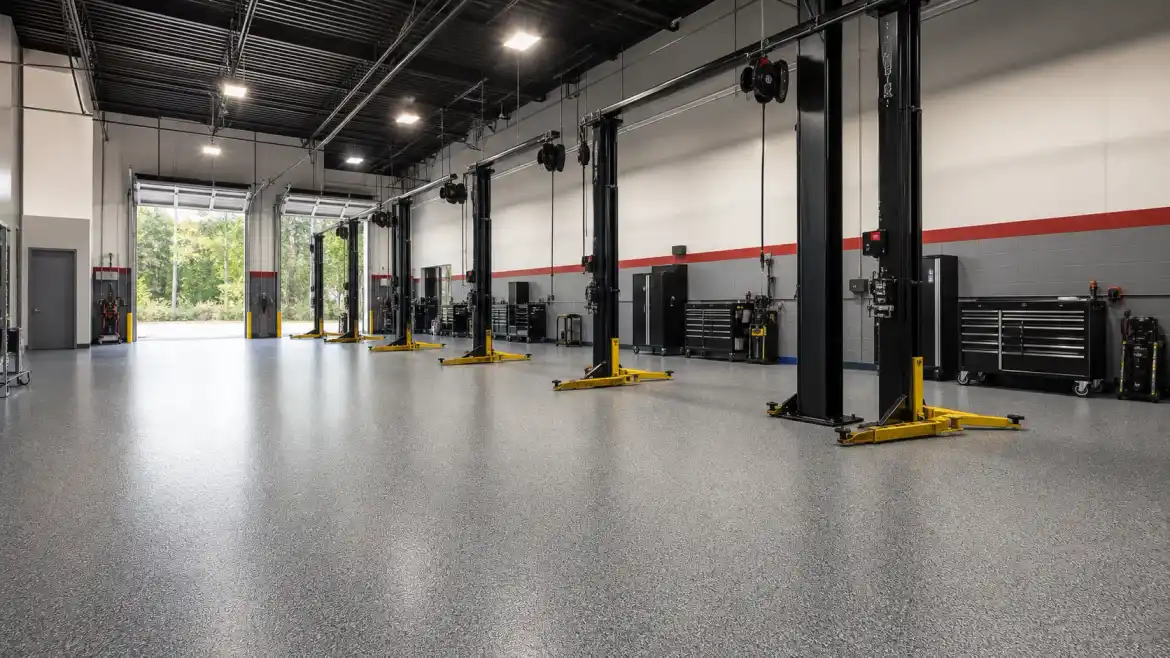
Auto Shop Epoxy Flooring
Auto shop floors need to stand up to oil, tires, lifts, dropped tools, rolling jacks, and customers walking through the bay. Garage Glow installs commercial-grade epoxy systems for Atlanta repair shops, detail studios, dealership service areas, and performance garages.
Auto shop epoxy flooring is a coated concrete system built for vehicle service environments. It helps control dust, improves cleanability, and gives service bays a more professional look while resisting many common shop spills when properly specified.
Garage Glow prepares the concrete mechanically before installing the coating layers. The final system should reflect tire traffic, oil exposure, lift placement, rolling jacks, tool drops, and the difference between working bays and customer-facing areas.
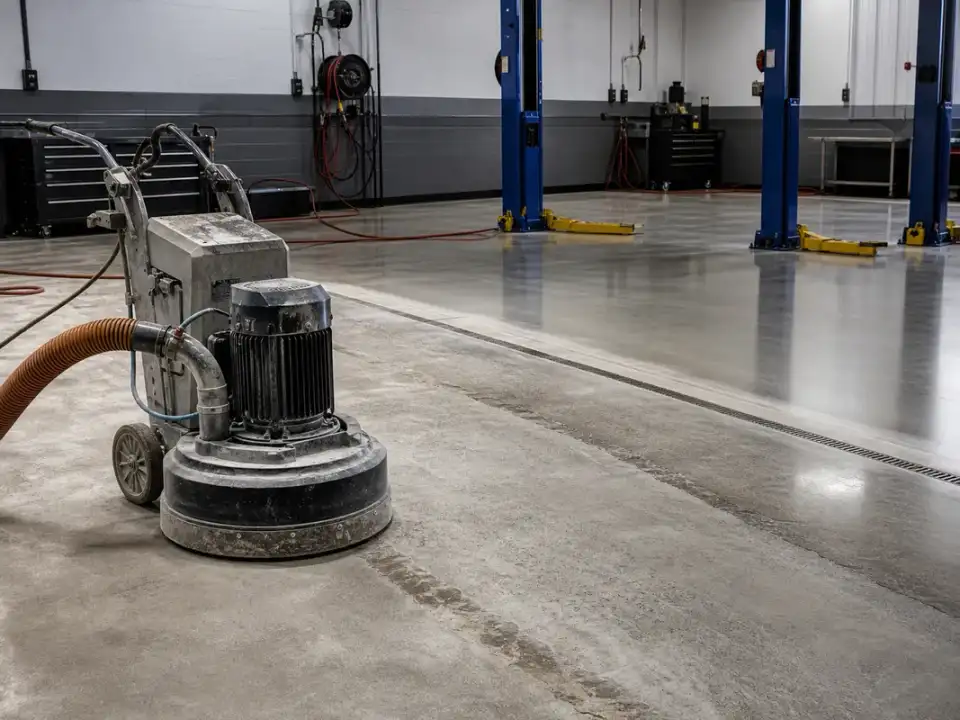
An auto shop floor has a harder job than a residential garage. The estimate should account for hot tires, fluids, lifts, jacks, dropped tools, and daily cleaning.
Motor oil, brake fluid, transmission fluid, cleaners, and solvents should be listed before product selection.
Vehicle tires can stress weak coatings, especially in warm conditions. Professional prep and the right coating system reduce pickup risk.
Lift posts, jack stands, and rolling jacks create point loads and abrasion. These zones should be identified during estimating.
Dealership service lanes, detail studios, and performance shops may need a cleaner visual finish than back-of-house bays. Finish choice can support both durability and presentation.
Wet tires, oil residue, and washing can create slip hazards. Texture should be selected around cleaning and traffic, not appearance alone.
Auto shop systems need a practical finish that hides some dirt, shows dangerous spills, and cleans without constant frustration.
The base coat bonds to properly prepared concrete. Oil contamination, old sealers, and weak surface concrete must be addressed before coating.
Flake blends can hide small debris and tire marks in busy bays. Solid colors create a clean, technical look but may show dirt and scratches faster.
The topcoat faces tires, fluids, tools, and scrubbing. Product choice should reflect the shop's actual exposures and maintenance routine.
Colors or striping can define lift bays, customer walk paths, wash areas, and tool zones. Layout should be approved before installation.
Repair bays need chemical resistance, cleanability, and durability around lifts. The system should reflect the amount of oil, brake fluid, and tool impact expected.
Detail areas see water, soaps, tire dressings, and customer scrutiny. Texture and finish color should support wet work while keeping the space sharp.
Service lanes need a professional appearance and predictable cleaning. A coated floor can help align the bay with the front-of-house experience.
Tire equipment, turning vehicles, and rolling tools create abrasion. These zones may need added review during the estimate.
Defined walk paths can help keep visitors out of work zones. Color marking and slip texture make the layout easier to understand.
| Factor | Auto Shop Epoxy | Bare Concrete | Basic Floor Paint |
|---|---|---|---|
| Oil cleanup | Strong when specified | Stains quickly | Limited |
| Tire resistance | System-dependent | Concrete unaffected but dusty | Often weak |
| Professional look | High | Unfinished | Short-term improvement |
| Tool and jack wear | Spec-driven | Concrete chips and stains | Paint peels easily |
Paint may look good for a short time, but shop traffic exposes thin coatings fast. Auto shop epoxy is a better fit when prep, topcoat, and maintenance are handled correctly.
A shop floor sees daily abuse. Maintenance should focus on spill control, grit removal, and protecting high-impact zones.
Wipe spills quickly, especially brake fluid, solvents, and aggressive cleaners. The coating system should be chosen around the fluids used in the shop.
Tire marks can happen, especially in turning zones. Regular cleaning and the right topcoat help reduce buildup.
Sweep often so grit, metal shavings, and dropped hardware do not abrade the topcoat. This also protects tires and tools.
Use pads or procedures recommended for the final system. Repeated jack movement and point loads should be monitored.
Check lift bays, entry points, and wash areas for wear. Addressing small damage early can help protect the rest of the floor.
Shop floors fail when coatings are applied over contaminated concrete or specified without understanding the work. Garage Glow looks at how the bay is used before recommending a finish.
Auto shops often have oil contamination or old coating residue. Mechanical prep and slab review are critical before the new system is installed.
Garage Glow uses commercial-grade materials and confirms warranty details with each estimate. Fluids, tires, lifts, and cleaning routines all influence the final recommendation.
Closing bays costs money. Garage Glow discusses phasing, equipment movement, cure windows, and reopening before the project is scheduled.
Mauricio Blanco owns Garage Glow and keeps the estimate process direct. The company is fully insured, based in Atlanta, and operating with a 2-minute lead response standard.
Many systems can resist common shop fluids, but the exposure list matters. Oil, brake fluid, transmission fluid, solvents, and cleaners should be reviewed before product selection. Prompt cleanup is still part of good maintenance.
Hot tire pickup is usually tied to poor prep, weak coatings, or a system that does not match the use. Garage Glow uses professional surface preparation and commercial-grade materials to reduce that risk.
Lift locations need to be reviewed before installation. In many cases, equipment movement or careful masking may be required.
Flake hides dirt, tire marks, and small debris better in busy bays. Solid colors can look clean and technical but often show wear faster. The right choice depends on whether the area is customer-facing, wet, or heavy-use.
Return-to-service timing depends on the coating system, cure conditions, and shop environment. Garage Glow will provide the expected cure window before work begins so bay scheduling is clear.
Warranty terms vary by shop use, chemicals, traffic, and maintenance. Some systems may include longer warranty options where applicable, but commercial warranty details are confirmed with each estimate.
Garage Glow will review your shop layout, lifts, fluids, traffic, and downtime window before recommending a coating system. The estimate will explain finish options and warranty details for the specific work environment.