Urine and Odor Resistance
The system should reduce liquid penetration into the slab. Seams, cracks, drains, and wall transitions need careful review because odor often hides in weak details.
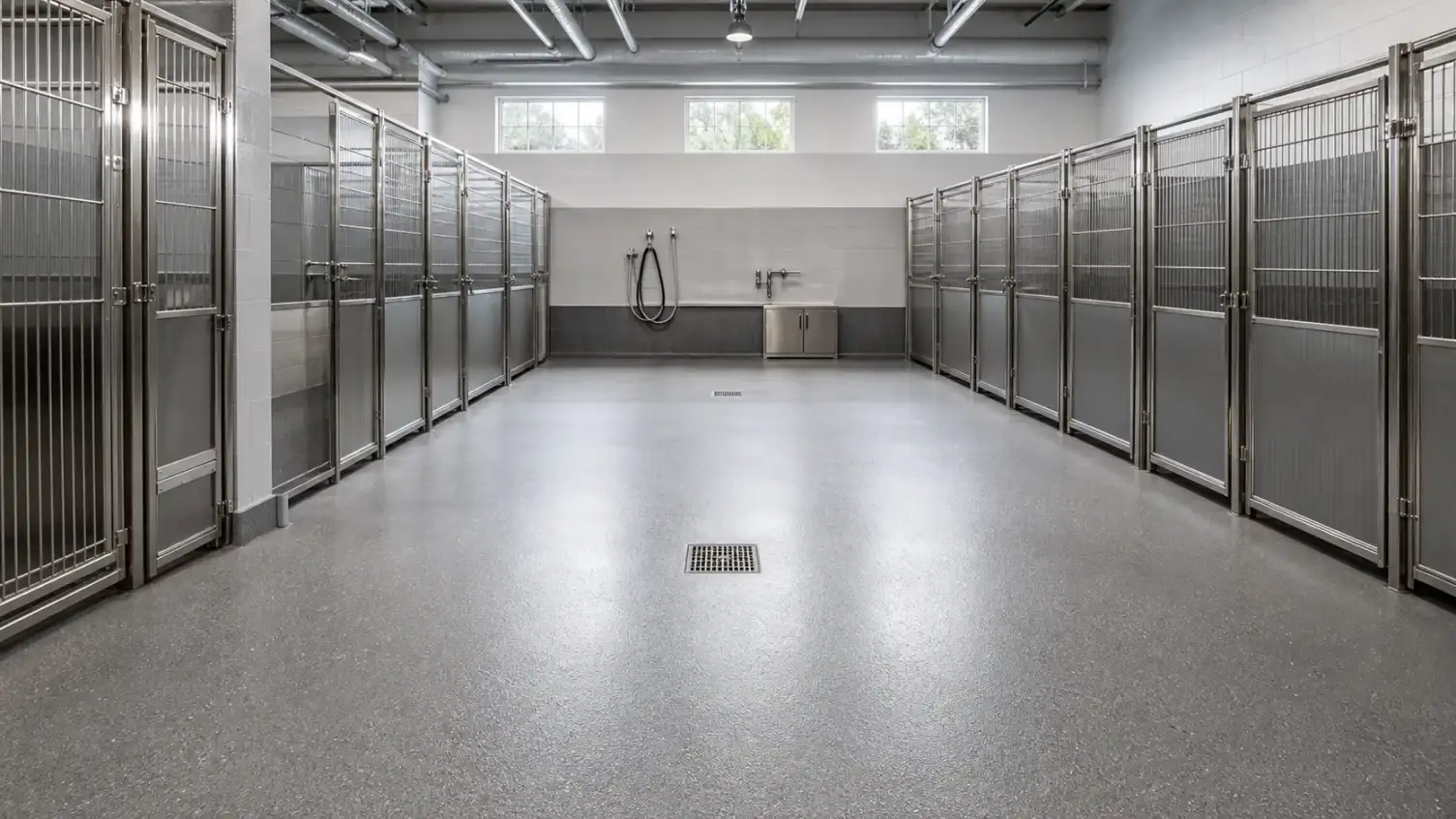
Kennel Epoxy Flooring
Kennel floors need to clean fast, control odor, and stay safe under paws and staff shoes. Garage Glow installs commercial-grade coating systems for Atlanta dog daycares, boarding facilities, grooming rooms, and veterinary support areas that cannot rely on bare concrete or peeling paint.
Kennel epoxy flooring is a coated concrete system designed for animal-care spaces where urine, water, disinfectants, and daily scrubbing are routine. The goal is a non-porous, cleanable floor that helps reduce odor absorption and protects the slab from constant moisture.
Garage Glow prepares the concrete mechanically, then installs a layered coating system selected around the facility layout. Runs, wash areas, grooming rooms, and corridors may need different texture levels, cove/base treatment, or topcoat performance.
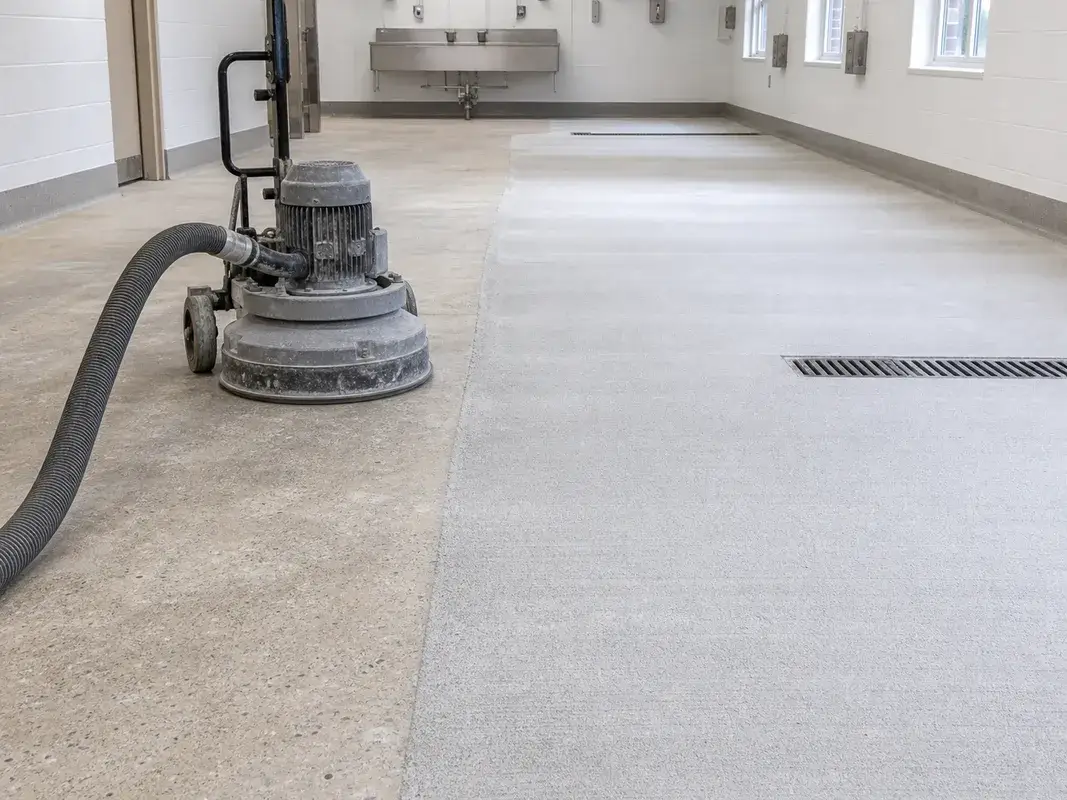
A kennel floor is judged by how it performs at 7 a.m. during cleaning, not by how it looks on installation day. Product selection should account for moisture, odor, traction, and sanitation expectations.
The system should reduce liquid penetration into the slab. Seams, cracks, drains, and wall transitions need careful review because odor often hides in weak details.
Texture can be adjusted so dogs have traction without making the floor painful to clean. The balance depends on run size, wash-down frequency, and staff footwear.
Some facilities require coated wall bases or vertical returns to reduce bacteria traps at floor-wall joints.
Existing slope and drain placement affect cleaning performance. Garage Glow will identify areas where standing water may shorten coating life or create safety concerns.
Cleaning products should be reviewed before installation.
Kennel coatings need a surface that looks clean, shows debris, and tolerates repeated wash-downs. The finish system can be adjusted by room type.
The base layer bonds to prepared concrete and helps build a sealed surface. Slab condition and moisture exposure guide product selection.
Flake, quartz, or traction aggregate can provide grip. Fine texture may work for corridors; heavier texture may be needed near wash stations or runs.
The topcoat carries the daily load of paws, claws, cleaning tools, disinfectants, and moisture. Warranty terms are confirmed with each estimate because animal-care use is harsher than ordinary commercial traffic.
Light gray and neutral blends make debris easier to see. Darker blends may hide staining better but can make cleaning verification harder in some spaces.
Runs need sealed floors with traction and quick cleaning. Drainage, wall transitions, and urine exposure should be reviewed before the coating system is selected.
Boarding areas benefit from durable, low-odor surfaces that can handle repeated disinfecting. A consistent finish also makes daily inspection easier for staff.
These rooms see standing water, soap, hair, and frequent mopping. Texture and topcoat selection should be planned around wet-foot traffic and cleaning tools.
Treatment support rooms, holding areas, and utility spaces may need sanitation-focused details.
Large play rooms need grip without creating a rough surface that traps dirt. The right broadcast level helps balance safety and cleanability.
| Factor | Kennel Epoxy | Bare Concrete | Tile |
|---|---|---|---|
| Urine absorption | Low when properly sealed | High | Low surface, grout vulnerable |
| Odor control | Strong system-dependent performance | Poor | Grout lines can retain odor |
| Cleaning speed | High | Slow and inconsistent | Moderate |
| Slip planning | Adjustable texture | Hard to control | Depends on tile and grout |
Tile can work in some animal-care settings, but grout lines often become the weak point. A properly planned coating reduces joints and gives staff a more continuous cleaning surface.
A kennel coating is only as good as the cleaning routine around it. Clear procedures help protect the floor and the animals using it.
Remove solids first, then clean with facility-approved products. Avoid letting urine sit against edges, drains, or wall transitions longer than necessary.
Strong chemicals should be mixed and used according to label directions. Over-concentrated cleaners may damage some coatings, so the product list should be reviewed during estimating.
Check drains, corners, and cove/base transitions for wear. These are the areas most likely to show early damage in animal-care environments.
If staff notice slipping after cleaning, the floor may need procedure changes or texture evaluation. Safety depends on the coating and the cleaning method.
Nails, carts, kennels, and cleaning tools all create abrasion. Pads on movable equipment and regular inspections can help extend service life.
Animal-care flooring leaves little room for vague promises. The slab, drains, cleaning products, and daily workflow all need to be part of the estimate.
Garage Glow starts with surface preparation because coatings fail when they are applied over weak, dirty, or moisture-affected concrete. Prep is what gives the system a chance to bond.
Commercial-grade materials are selected around urine exposure, disinfectants, and wet traffic.
Mauricio Blanco owns Garage Glow and keeps the project scoped clearly. That includes access planning, downtime, cure windows, and what areas can reopen first.
Garage Glow is fully insured, responsive, and focused on durable coating systems designed around each facility's cleaning, traction, and downtime requirements.
It can help because a sealed coating reduces urine absorption into porous concrete. Odor control still depends on drains, wall transitions, cleaning frequency, and product compatibility. Garage Glow reviews those details before recommending a system.
The floor can be built with texture to improve traction for paws and staff shoes. Too much texture can trap hair and residue, while too little can become slick when wet. The estimate should balance safety and cleaning efficiency.
Cove/base or vertical coating details may be possible and are often relevant in sanitation-focused spaces. Requirements vary by facility type and jurisdiction.
Reopening depends on the system, room size, ventilation, and cure schedule. Animal-care spaces may require extra caution before reintroducing pets. Garage Glow will discuss downtime before the work is scheduled.
Some chemicals are harder on coatings than others, especially if mixed too strong or left to dwell for long periods. Provide the disinfectant list during the estimate so product compatibility can be reviewed before installation.
Warranty details depend on use, cleaning chemistry, moisture exposure, and system selection. Some Garage Glow systems may have longer warranty options where applicable, but kennel environments require project-specific confirmation.
Garage Glow will review your animal-care space, cleaning process, drainage, and traffic before recommending a coating system. The estimate will include practical next steps and warranty details for the specific environment.