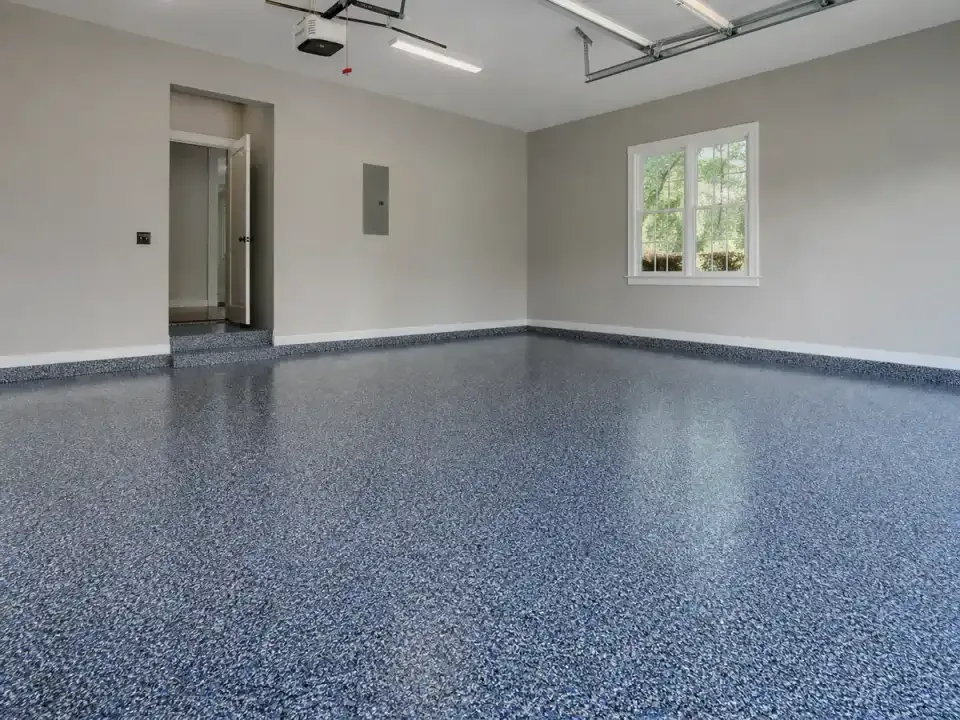
If you are comparing garage floor coatings in Atlanta, the epoxy versus polyaspartic question is usually the first decision point. Both systems can produce a durable, attractive garage floor, but they are not interchangeable choices. Garage Glow installs commercial-grade polyaspartic garage coating systems over concrete that has been evaluated, cleaned, mechanically profiled, and repaired where needed, and also offers metallic epoxy flooring for homeowners who want a custom, high-gloss decorative finish. The right system for your garage depends less on brand names and more on your slab condition, how quickly you need to use the space, and the look you want.
Start With the Concrete, Not the Coating Name
It is tempting to compare epoxy and polyaspartic purely as competing chemistries, but coating performance depends heavily on what is underneath the finish. Before recommending a system, the concrete needs to be evaluated, cleaned, mechanically profiled, and repaired where necessary. A coating applied over cracks, spalling, oil contamination, old failed coatings, weak surface areas, or unresolved moisture issues is unlikely to perform as expected, regardless of which product is used. This is the most meaningful failure risk in garage coating projects, and it is a useful way to evaluate what any installer has actually included before comparing bids.
Atlanta Conditions Worth Factoring In
Atlanta garages regularly deal with humidity, tracked-in rain, hot tires, and daily vehicle traffic. These everyday conditions make moisture evaluation and proper preparation especially relevant here, since a slab with trapped moisture or inadequate prep can undermine an otherwise good coating choice. Garage Glow evaluates visible moisture issues before recommending a system, which is part of why preparation gets treated as a core step rather than a formality.
Polyaspartic vs. Epoxy: The Practical Differences
Once the slab has been assessed, the choice between polyaspartic and epoxy generally comes down to priorities rather than one system being universally better.
| Factor | Polyaspartic | Standard / Metallic Epoxy |
|---|---|---|
| Best suited for | Durable, everyday-use residential garage floors | Custom, high-gloss decorative finishes |
| UV stability | UV-stable, relevant near an open garage door | Can be more prone to UV-related changes over time |
| Turnaround | Commonly selected to support faster turnaround | Design and finish work can extend the process |
| Design character | Consistent, practical finish | One-of-a-kind pigment movement with less exact repeatability |
In short, polyaspartic is commonly selected for residential garage systems because it is UV-stable and supports a faster turnaround, while standard epoxy can be the more appropriate choice where a custom, high-gloss metallic appearance is the main goal. Neither system is automatically the right answer. The decision should follow your slab condition, timeline, and design priorities.
Decorative Flake vs. Metallic Epoxy: A Finish Decision, Not Just a Material Decision
A related choice homeowners run into is flake versus metallic epoxy, and this is really a finish decision layered on top of the coating decision.
- A decorative flake system adds visual texture and can help hide minor visual variation and debris, making it a practical fit for a garage that sees daily use.
- Metallic epoxy creates a one-of-a-kind look through pigment movement, with a smoother, glossier surface, but less exact design repeatability from one project to the next.
- Because metallic epoxy requires different design control and finish work, it is priced separately from a standard decorative flake system.
If your priority is a durable floor that handles daily wear without much thought, flake is typically the more practical direction. If you want a statement floor and are comfortable with some natural variation in the final pattern, metallic epoxy is built for that. You can review real examples and options on the professional garage floor coating systems page or the custom metallic epoxy floor options page.
Why Two Similar Garages Can Get Different Estimates
Garage Glow uses project-based pricing rather than a fixed public rate. That is because several variables affect scope on every project:
- Garage size
- Concrete condition and required repairs
- Moisture needs identified during evaluation
- Steps, stem walls, or access considerations
- Finish selection, including flake versus metallic epoxy
This is why two same-size garages can receive different estimates. It also explains why a clear written estimate matters more than a quoted square-foot price. A thorough estimate should outline the surface scope, the preparation plan, the selected system, the finish, warranty details, and return-to-use guidance, so you know exactly what is included before comparing bids.
Return-to-Use Timing
Fast turnaround is often marketed as a flat promise, but return-to-use timing should be confirmed only after the slab, preparation needs, weather, and selected product system have been reviewed. A garage needing repair work or moisture mitigation will have a different timeline than one that is ready for coating as-is. Confirming this during your estimate, rather than assuming a blanket timeline, gives you an accurate expectation for your specific project.
What to Look for in Coverage and Warranty Terms
Garage Glow is fully insured and provides workmanship warranty details with every estimate, with a manufacturer-backed product warranty available when the selected system qualifies. When comparing options, it is worth reviewing the written coverage and project scope rather than assuming all coating systems carry identical warranty terms.
Frequently Asked Questions
Does UV exposure near an open garage door make a difference when choosing between epoxy and polyaspartic?
Yes, UV exposure is one of the practical reasons polyaspartic is commonly selected for garages with doors that are frequently open, since it is UV-stable. Epoxy can still be a good fit when a custom, high-gloss metallic look is the priority.
What should be included in a garage floor coating estimate before comparing prices?
A clear estimate should cover the surface scope, the preparation plan, the selected coating system, the chosen finish, warranty details, and return-to-use guidance, so you can compare bids on equal terms rather than price alone.
Ready to Find the Right System for Your Garage?
If you are weighing epoxy against polyaspartic for your Atlanta garage, the fastest way to get a clear answer is a concrete evaluation and a written estimate built around your slab and goals. Garage Glow serves homeowners throughout Marietta, Alpharetta, Roswell, Suwanee, Johns Creek, Decatur, Stone Mountain, Norcross, Peachtree Corners, Smyrna, and Sandy Springs. Call 404-924-8374 to talk through your garage and get a system recommendation based on your specific concrete and finish priorities.